Vance Criticizes Israel Over US-Iran Deal: Tensions Between Allies
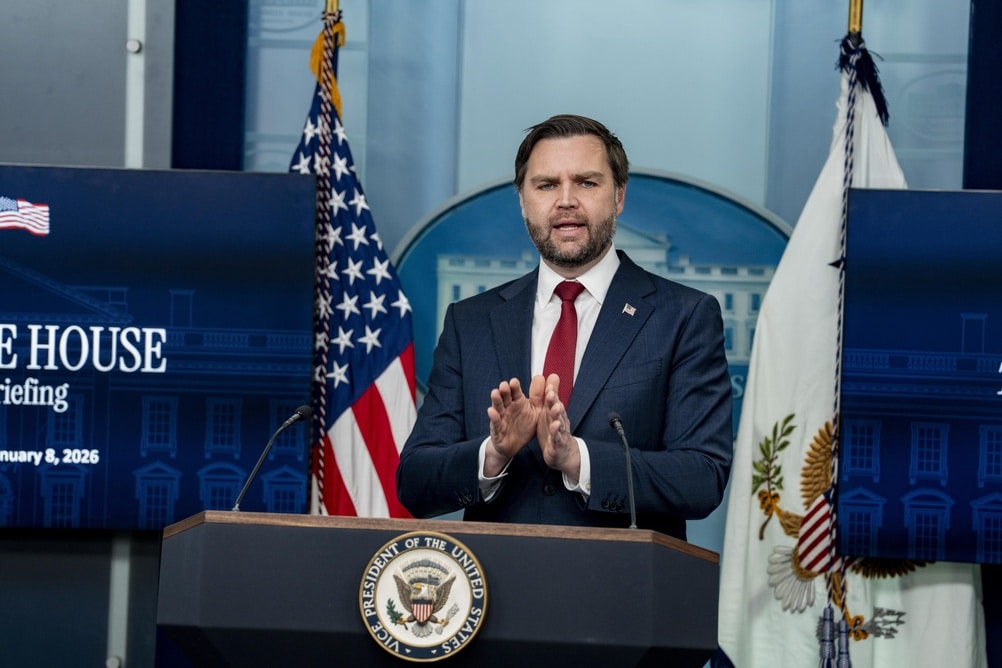
US Vice President JD Vance criticized Israel's response to the US-Iran agreement as 'strange panic,' escalating tensions between Washington and Tel Aviv. The deal, aimed at lifting sanctions on Tehran, has sparked divisions in Israel and concerns among regional allies.
Vance Criticizes Israel Over Iran Deal: Tensions Between Allies
18 June 2026
JD Vance's Statements Spark Controversy
US Vice President JD Vance sharply criticized Israel's reaction to the agreement reached between Washington and Tehran. In an interview broadcast on 18 June 2026, Vance described Israeli responses as strange panic and an overreaction. These remarks come as the Trump administration attempts to ease tensions surrounding the deal, seen as a major step toward regional stability.
Vance emphasized that the United States funds a large portion of Israel's arsenal, noting that two-thirds of the weapons used by Israel are produced in the US and paid for by American taxpayers. This comment aimed to remind Tel Aviv of the importance of the bilateral relationship and to warn against challenging US policy.
Israeli Reactions and Internal Political Context
Israel's response was swift. Prime Minister Benjamin Netanyahu, already under internal pressure, faced criticism from members of his own government. Far-right ministers Itamar Ben-Gvir and Bezalel Smotrich rejected the deal and demanded the continuation of military operations in Lebanon. These divisions highlight fractures within the governing coalition, where hardline positions are gaining ground.
Donald Trump adopted a more measured stance. He called on Middle Eastern countries to support the negotiations while avoiding direct confrontation with Israel. This approach contrasts with the president's past statements, often seen as unconditional support for Israel. Vance claimed that Trump was "the only world leader currently supporting Israel," a statement that has sparked differing interpretations.
A Deal with Major Economic Implications
The agreement between the United States and Iran provides for the gradual lifting of economic sanctions imposed on Tehran. These measures, in place for several years, aimed to limit Iranian oil exports and restrict access to international financial markets. Their removal could allow Iran to recover some of its oil revenues, estimated at tens of billions of dollars annually before sanctions.
Vance downplayed the impact of this lifting, asserting that Iran would gain no new advantage. However, observers note that Tehran could quickly increase its oil production, which would have repercussions on global prices. The deal contains no binding clauses on Iran's nuclear program or its ballistic arsenal, two major concerns for Israel and Gulf countries.
Geopolitical Stakes and Regional Security
The deal raises concerns about the security of Israel and Gulf monarchies. The United Arab Emirates and Saudi Arabia, though less critical than Tel Aviv, have expressed reservations about the guarantees offered to Iran. These countries fear a resumption of Tehran's destabilizing activities, particularly through its allied militias in Iraq, Syria, and Yemen.
Vance defended the deal, arguing that no state could accept conditions that deprived it of means of defense. This position reflects the Trump administration's desire to strike a balance between Israel's security and the need to defuse tensions with Iran. However, critics point out that the deal includes no strict verification mechanism for Iran's nuclear program, unlike the Joint Comprehensive Plan of Action (JCPOA) signed in 2015 under Barack Obama.
Repercussions on US-Israeli Relations
Vance's statements have reignited debates about the nature of the alliance between Washington and Israel. Some analysts believe the Trump administration is seeking to rebalance its Middle East policy by reducing strategic dependence on Israel. Others see it as an attempt to pressure Netanyahu to moderate his positions, particularly on West Bank settlements and military operations in Lebanon.
Israel remains divided on how to respond. Part of the political class calls for strengthened cooperation with the United States, while the most radical factions advocate a more uncompromising stance. This polarization could complicate future negotiations, particularly on the Palestinian issue and the normalization of relations with Arab countries.
Economic Prospects for Iran
The lifting of sanctions could allow Iran to revive its economy, severely affected by trade restrictions. Before sanctions, the country exported about 2.5 million barrels of oil per day. A partial resumption of these exports could inject billions of dollars into the Iranian economy and influence global crude prices.
However, obstacles remain. International companies may hesitate to return to Iran due to fears of secondary U.S. sanctions. Additionally, internal political instability and regional tensions could deter foreign investment. The agreement does not include measures to combat terrorism financing or the activities of the Islamic Revolutionary Guard Corps, a powerful militia in Iran.
The international reactions
The agreement has been met with caution by the United States' European allies. The European Union (EU), which had supported the 2015 JCPOA, welcomed the de-escalation efforts while calling for additional guarantees on Iran's nuclear program. Russia and China, which maintain economic relations with Tehran, have also expressed their support while avoiding openly criticizing Israel.
The Gulf countries, for their part, remain skeptical. Saudi Arabia and the United Arab Emirates have called for further discussions to ensure the agreement does not compromise their security. These countries fear that Iran may use the lifting of sanctions to strengthen its regional influence, particularly through its proxies in Yemen and Syria.
Conclusion: toward a new regional dynamic?
JD Vance's criticism of Israel reveals growing tensions between the two historical allies. If implemented, the agreement with Iran could reshape geopolitical balances in the Middle East. For the United States, the challenge is to reconcile its strategic interests with those of its regional partners while avoiding military escalation.
Israel will have to navigate between internal pressures and Washington's expectations. The coming months will be crucial in determining whether this agreement marks the beginning of lasting détente or merely postpones conflicts. One thing is certain: the relationship between the United States and Israel, once considered unshakable, is going through an unprecedented period of turbulence.
Key Points
- JD Vance criticizes Israel's reaction to the US-Iran deal, describing it as 'strange panic' and an 'overreaction'.
- The agreement provides for the gradual lifting of economic sanctions against Iran, without binding clauses on its nuclear program.
- Israel is divided: Netanyahu under pressure, while Ben-Gvir and Smotrich reject the agreement and demand military operations in Lebanon.
- Vance notes that the United States funds two-thirds of Israel's arsenal, underscoring the importance of the bilateral relationship.
- The agreement could revive the Iranian economy through oil exports but raises concerns among regional allies.
Sources
- CBS International - "6/18: The Takeout with Major Garrett". (secondary)
- Straits Times SG - "Vance criticizes Israel 'freakout' over Iran deal in New York Times interview". (secondary)
- Hindustan Times World - "‘Cannot kill your way out’: JD Vance rebukes Israeli critics of US-Iran deal". (secondary)
- Investing.com News - "Vance criticizes Israel ’freakout’ over Iran deal in New York Times interview". (secondary)
- The Hindu World - "JD Vance slams Israeli officials who criticised U.S.-Iran deal, deepening rift between allies". (secondary)
- NOS News - "Vance lashes out at critics in Israel: 'U.S. pays for your protection'". (secondary)
- HVG Hungary - "JD Vance responds to critics of the U.S.-Iran agreement". (secondary)
Transparency: 7 sources (0 primary, 7 secondary). Verification: June 19, 2026.
Truthyx - June 19, 2026