Qatar open to temporary Strait of Hormuz tolls, rejects permanent fees
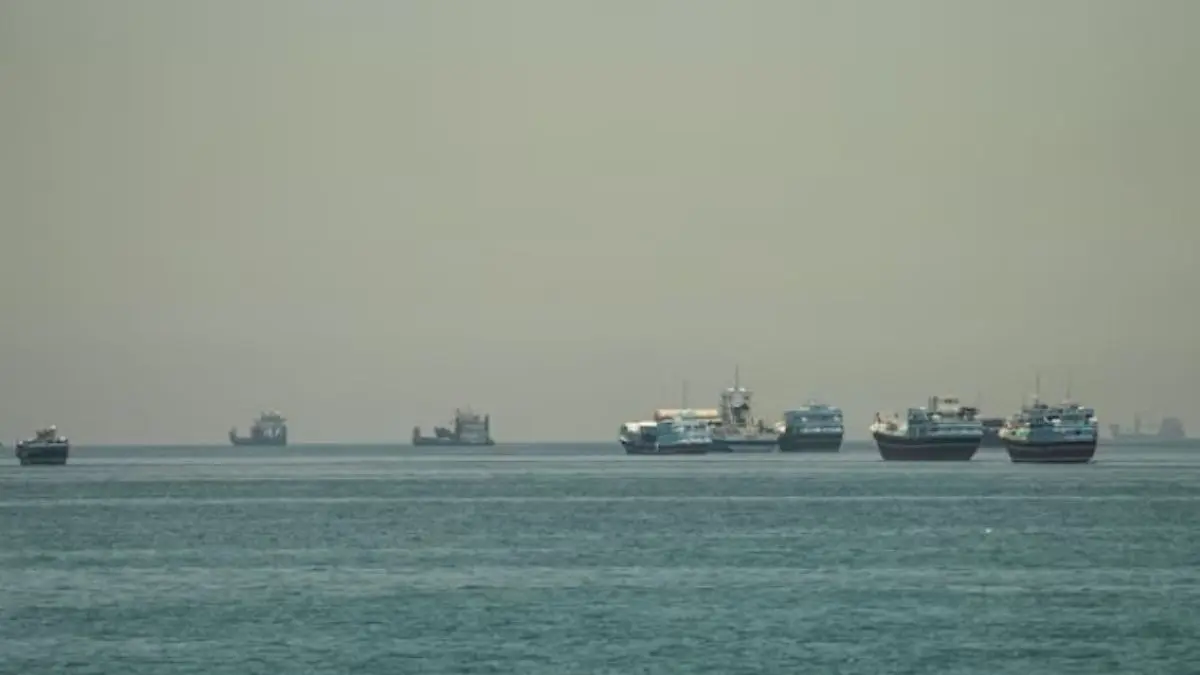
Qatar opposes permanent tolls in the Strait of Hormuz but is open to temporary fees to restore normal traffic. The country's position reflects concerns over increased costs and disruptions to global maritime trade.
Qatar open to temporary Strait of Hormuz tolls, rejects permanent fees
Qatar's position on Strait of Hormuz tolls
Qatar has clearly indicated its opposition to the establishment of permanent tolls in the Strait of Hormuz. A senior Qatari official clarified that these fixed fees could increase costs for consumers worldwide. Doha believes that such measures could permanently disrupt maritime trade.
The country is, however, open to the idea of temporary tolls. These provisional taxes could facilitate the restoration of normal traffic in this strategic waterway. The Strait of Hormuz, through which about a third of the world's oil passes, remains a critical point for the global economy.
A Qatari official emphasized that discussions are possible for temporary solutions. These measures should, however, respect the international agreements governing freedom of navigation. The 1982 United Nations Convention on the Law of the Sea (UNCLOS) particularly frames the innocent passage in straits used for international navigation.
Geopolitical context and regional issues
The Strait of Hormuz connects the Persian Gulf to the Indian Ocean. Barely 33 kilometers wide at its narrowest point, it constitutes a bottleneck for energy exports. Iran, located on the northern shore, has repeatedly threatened to block this passage in case of increased tensions with the United States or its allies.
In 2019, attacks on oil tankers in the area had raised fears of escalation. These incidents had revealed the vulnerability of this maritime route. Qatar, the world's leading exporter of liquefied natural gas (LNG), heavily depends on the stability of the strait for its deliveries to Asia and Europe.
The United Arab Emirates (UAE) and Saudi Arabia have alternative pipelines. These infrastructures allow partially bypassing the strait. Qatar, on the other hand, does not have such bypass solutions. This dependence partly explains its caution towards any measure that could disrupt traffic.
International reactions and divergent positions
The United States has firmly rejected the idea of tolls in the Strait of Hormuz. Washington believes that this waterway must remain free of any hindrance. The European Union has adopted a similar position, invoking the principle of freedom of navigation. Several Asian countries, including China and Japan, have also expressed their reservations.
Iran has reacted cautiously to Qatari statements. Tehran has recalled that the Strait of Hormuz falls under the sovereignty of the littoral states. Iran and Oman, which border the strait, have not yet officially taken a position on the issue of tolls. The two countries could, however, demand compensation in case of the introduction of taxes.
Shipping companies have expressed their concern. An association grouping the main shipowners estimated that tolls would increase transport costs. These fees would likely be passed on to end consumers. Energy and manufactured goods prices could be affected.
Potential economic consequences
The introduction of temporary tolls in the Strait of Hormuz would have immediate repercussions. Maritime transport costs could increase by 5 to 10% according to some estimates. This increase would affect the prices of raw materials, particularly oil and natural gas.
Qatar, whose LNG exports represent more than 80% of its revenues, would be particularly exposed. A disruption of traffic in the strait could reduce its export capacities. The country has, however, diversified its trade routes in recent years, partially limiting its dependence.
Energy-importing countries would also be affected. China, Qatar's main customer for LNG, has already expressed its concerns. An increase in energy costs could slow down the post-pandemic economic recovery. India and Japan, other major importers, would also be affected.
Legal framework and international precedents
The issue of tolls in international straits has been debated for decades. UNCLOS guarantees the right of innocent passage in these areas. It prohibits littoral states from hindering navigation or imposing discriminatory taxes. Some straits, like the Strait of Malacca, are subject to mandatory pilotage fees.
The Suez Canal and the Panama Canal have applied tolls since their creation. These fees fund the maintenance of infrastructures and services provided to ships. The Strait of Hormuz does not have such facilities, which complicates the justification of taxes. Littoral states would have to demonstrate that these tolls cover specific costs related to navigation.
In 1988, the International Court of Justice ruled on a dispute between the United States and Nicaragua. It recalled that international straits should remain open to all vessels. This decision could serve as a reference in the event of a dispute over tolls in the Strait of Hormuz.
Possible scenarios and ongoing negotiations
Several options are currently being considered to resolve this issue. A temporary solution could consist of a common fund. The countries using the strait would contribute to its maintenance and security. This mechanism would avoid the introduction of direct tolls while spreading the costs.
Qatar has proposed organizing an international conference on the issue. This meeting would bring together the coastal states, the major maritime powers, and international organizations. The objective would be to find an agreement that respects both the sovereignty of the states and the freedom of navigation.
The United States could propose an alternative in the form of military guarantees. Washington could strengthen its naval presence in the region in exchange for the abandonment of toll projects. This solution, however, would present risks of escalation with Iran.
Impact on consumers and supply chains
Consumers would be the first affected by an increase in transport costs. Fuel prices could rise by 2 to 5% depending on the region. Manufactured goods, often transported by sea, would also see their prices rise. This inflation would particularly affect countries dependent on imports.
Global supply chains could be disrupted. Delivery times could lengthen in the event of increased controls in the strait. Companies would then have to build up safety stocks, increasing their logistics costs. Some sectors, such as automotive or electronics, would be particularly vulnerable.
Developing countries would be the most affected. Their ability to absorb an increase in transport costs is limited. Essential products, such as medicines or foodstuffs, could become less accessible. This situation could worsen humanitarian crises in certain regions.
Conclusion and perspectives
Qatar's position on tolls in the Strait of Hormuz reflects the tensions between national sovereignty and freedom of navigation. The openness to temporary solutions shows a willingness to compromise, but the obstacles remain numerous. The coming months will be crucial in determining whether an international agreement can be found.
The negotiations will have to take into account the divergent interests of the coastal states and the maritime powers. China and India could play a mediating role, their energy dependence encouraging them to find a solution. The European Union could also become more involved, as its LNG supply is at stake.
The evolution of the situation will largely depend on the relations between Iran and the United States. A thaw in this area would facilitate discussions on the Strait of Hormuz. Conversely, an escalation of tensions would make any negotiated solution more unlikely. The next international summits, notably the G20, could offer a platform to advance on this issue.
Whatever the outcome, this crisis highlights the vulnerability of strategic sea routes. Countries dependent on international trade will have to rethink their supply strategy. The diversification of routes and energy sources appears to be a necessity to reduce future risks.
Key Points
- Qatar opposes permanent tolls in the Strait of Hormuz due to potential cost increases and trade disruptions.
- Qatar is open to temporary tolls to facilitate the restoration of normal traffic.
- The Strait of Hormuz is crucial for global energy exports, with about a third of the world's oil passing through it.
- International reactions vary, with the US and EU opposing tolls and Iran emphasizing the sovereignty of littoral states.
- Temporary tolls could increase maritime transport costs by 5-10%, affecting global energy prices.
Sources
- Al Jazeera World - "Qatar says temporary charges ‘negotiable’". (secondary)
- Bloomberg - "Qatar Says Temporary Toll at Strait of Hormuz Is Negotiable". (secondary)
- Financial Post - "Qatar Says Temporary Hormuz Fee to Clear Mines Is Negotiable". (secondary)
- Financial Post - "Qatar Says Temporary Toll at Strait of Hormuz Is Negotiable". (secondary)
- Straits Times SG - "Qatar says temporary toll at Strait of Hormuz is negotiable, could help restore passage". (secondary)
- Middle East Eye - "Qatar open to temporary Strait of Hormuz charges but rejects permanent fees". (secondary)
Transparency: 6 sources (0 primary, 6 secondary). Verification: May 31, 2026.
Truthyx - May 31, 2026