EU launches accession negotiations with Ukraine and Moldova
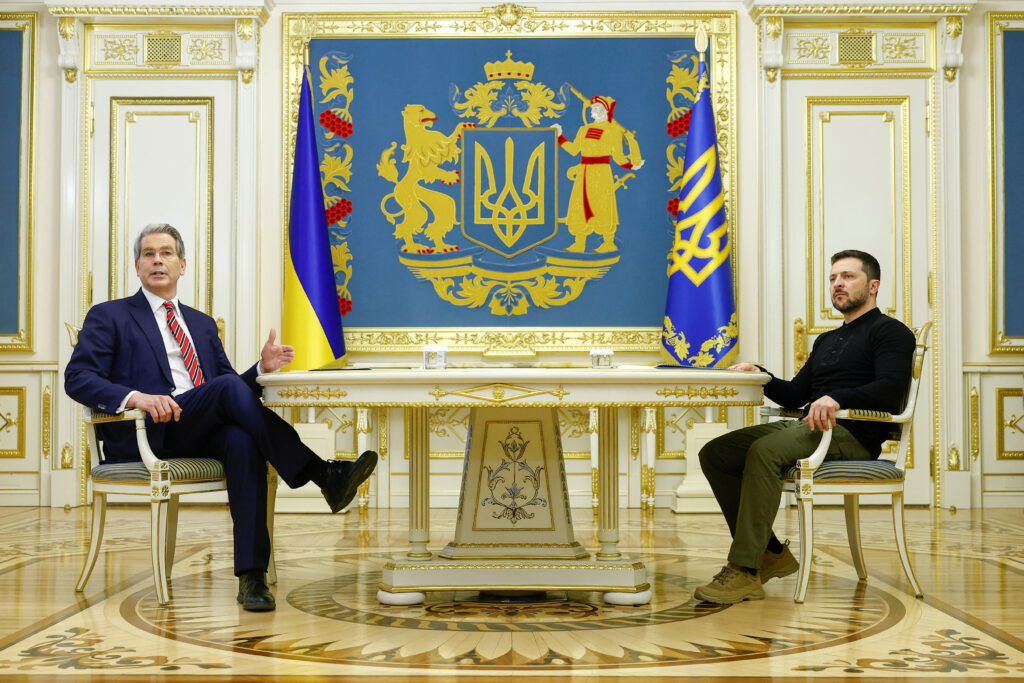
On June 15, 2026, the EU officially opened accession negotiations with Ukraine and Moldova, marking a significant step amid geopolitical challenges and ongoing reforms. The decision strengthens their sovereignty against Russian influence but remains a lengthy and complex process.
The European Union opens accession negotiations with Ukraine and Moldova
Context and historic decision
On June 15, 2026, the twenty-seven member states of the European Union (EU) approved the opening of the first accession negotiations with Ukraine and Moldova. This decision marks a major step in the rapprochement of these two countries with the European bloc, following years of reforms and geopolitical pressures. Formal discussions will officially begin on this day, initially focusing on the "fundamentals": the rule of law, democratic institutions, and respect for European values.
Ukraine and Moldova, both former Soviet republics, see this accession as a means to consolidate their sovereignty against Russian influence. Since the collapse of the Soviet Union, these nations have faced constant pressure from Moscow, culminating in the large-scale invasion of Ukraine in February 2026. For Kyiv, European integration represents a guarantee of security and stability, while Chisinau sees it as an opportunity to distance itself from a burdensome neighbor.
The European Commission hailed this progress as recognition of the efforts made by both countries. Despite the war and internal challenges, Ukraine has accelerated its judicial and anti-corruption reforms, while Moldova has strengthened its institutions to combat foreign interference. These advances have convinced member states to take this step, although the process promises to be long and complex.
Reactions and geopolitical implications
The EU’s decision has sparked mixed reactions among regional and international actors. In Kyiv, President Volodymyr Zelensky described this step as a "strategic victory," emphasizing that Ukraine is finally fulfilling its commitments to its citizens. For him, EU membership is not just an economic issue but a protection against future Russian aggression. Moldova, led by President Maia Sandu, also welcomed this progress, seeing it as confirmation of its pro-European trajectory.
In Budapest, the Hungarian government lifted its veto following a historic agreement with Ukraine on the rights of the Hungarian minority. This concession unblocked the negotiations, although Hungary maintains its opposition to an accelerated process. Viktor Orbán, whose party lost its absolute majority in the last elections, remains a potential obstacle, but his influence has diminished since his defeat.
On the Russian side, the Kremlin reacted with hostility, denouncing a "provocation" by the West. Moscow views EU enlargement as a direct threat to its interests, especially as Ukraine and Moldova could eventually join the North Atlantic Treaty Organization (NATO). This prospect fuels tensions, as the war in Ukraine continues without a clear resolution.
Within the EU, opinions differ on the pace of negotiations. Some countries, such as Poland and the Baltic states, advocate for accelerating the process, arguing that Europe’s stability depends on it. Others, like France and Germany, insist on the need to respect accession criteria without rushing. The debate reflects fears of a poorly prepared enlargement that could weaken the Union.
Process and upcoming challenges
Accession negotiations revolve around thirty-five chapters, covering areas as diverse as agriculture, justice, and foreign policy. For Ukraine and Moldova, the first challenges involve reforming the rule of law and combating corruption. These requirements, already difficult in peacetime, become even more complex in the context of war for Kyiv.
Ukraine will need to harmonize its judicial system with European standards, a colossal task while the country remains at war. Moldova, for its part, must still prove its ability to resist Russian pressures, particularly in Transnistria, a separatist region supported by Moscow. Both countries will benefit from European funds to assist in their transition, but the allocated amounts remain subject to debate.
Another major obstacle lies in the unanimity required within the EU. Each member state has a veto right, meaning a single country can block the process. Hungary has already shown it would not hesitate to use this leverage to defend its interests. Other countries could follow, especially if negotiations drag on.
Finally, accession itself is not guaranteed for several years. Even in the most optimistic scenario, Ukraine and Moldova will not join the EU before the end of the decade. In the meantime, they must maintain their reforms while managing internal and external crises. For Kyiv, the priority remains military victory, without which any European integration would be compromised.
Agreements and treaties at stake
This decision is part of several existing agreements between the EU and the two countries. Ukraine signed an association agreement in 2014, followed by a Deep and Comprehensive Free Trade Agreement. Moldova followed suit in 2016 with a similar agreement. These texts laid the groundwork for the reforms necessary for future accession, but their implementation remains uneven.
In 2022, the EU granted Ukraine and Moldova official candidate status, a symbolic first step. Since then, both countries have worked to align their legislation with European standards, particularly in the areas of human rights and governance. The Treaty on European Union, which sets out the accession criteria, also requires a viable market economy and the capacity to assume the obligations of membership.
For Moldova, another treaty comes into play: the 5+2 agreement on Transnistria, signed in 2016. This text aims to resolve the frozen conflict in the region, but progress remains limited. Without a lasting solution, Moldova’s accession to the EU could be compromised, as the Union refuses to import territorial conflicts.
Diverging Perspectives
Opinions on the accession of Ukraine and Moldova vary across European capitals. In Warsaw and Vilnius, it is believed that their integration would strengthen the continent’s security in the face of Russia. These countries, which border Ukraine, see enlargement as a strategic necessity. In Paris and Berlin, however, there are concerns that the EU may be embarking on a process that is too rapid, risking the weakening of its institutions.
The budgetary question also divides. Ukraine, with its forty million inhabitants, would become one of the largest beneficiaries of European funds, which would require a reform of the EU budget. Some member states, such as the Netherlands, are demanding guarantees on the use of these funds, fearing embezzlement or mismanagement.
Finally, Russia continues to play an indirect role in these negotiations. Moscow uses all the levers at its disposal to slow down the process, whether through cyberattacks, disinformation campaigns, or economic pressures. The war in Ukraine has shown that the Kremlin will stop at nothing to prevent Kyiv from moving closer to the West.
Conclusion: An Uncertain but Promising Future
The opening of accession negotiations with Ukraine and Moldova marks a turning point in the history of the EU. For these two countries, it is the culmination of a long struggle to free themselves from Russian influence and anchor themselves in the Western camp. For the Union, it is a bet on stability and democracy in Eastern Europe, but also an unprecedented challenge.
The coming years will be crucial. Ukraine will have to balance war and reforms, while Moldova will need to prove its resilience against foreign interference. The EU, for its part, will have to find a balance between enlargement and internal cohesion. While the obstacles are numerous, this decision sends a clear signal: Europe remains an open project, capable of welcoming new members despite crises.
In the long term, the accession of Ukraine and Moldova could redraw the geopolitical map of Europe. It would strengthen the EU’s eastern flank but would also require sacrifices from current member states. In a context of growing tensions with Russia, this step could well be the most important since the 2004 enlargement. It remains to be seen whether the Union will be able to reap the benefits without paying the price.
Key Points
- The EU approved the opening of accession negotiations with Ukraine and Moldova on 15 June 2026.
- Discussions will initially focus on the rule of law, democracy, and European values.
- Hungary lifted its veto following an agreement on the rights of the Hungarian minority in Ukraine.
- Russia denounces this as a "provocation," while Kyiv and Chisinau see it as a strategic victory.
- The process is expected to be lengthy, with major challenges such as judicial reform and the fight against corruption.
Sources
- Politico Europe - "EU countries approve starting membership talks with Ukraine, Moldova". (secondary)
- WaPo World - "Hungary lifts block on Ukraine’s E.U. bid but opposes fast track sought by Kyiv". (secondary)
- France Info - "'A long political process': despite progress, Ukraine's accession to the European Union is not imminent". (secondary)
- El Tiempo Colombia - "The European Union takes the first step toward negotiations for Ukraine's accession and deepens its geopolitical standoff with Russia". (secondary)
- Publico Portugal - "EU unlocks first round of negotiations for Ukraine's accession". (secondary)
- El Mundo World - "Von der Leyen announces the 'formal start of accession negotiations' for Ukraine and Moldova in the 'coming days'". (secondary)
- Liberation - "The EU will resume negotiations on Ukraine's accession on Monday". (secondary)
- Hamburger Abendblatt - "EU prepares accession talks with Ukraine and Moldova". (secondary)
- Observador PT - "EU unlocks round of negotiations for Ukraine's accession". (secondary)
Transparency: 9 sources (0 primary, 9 secondary). Verification: June 15, 2026.
Truthyx - June 15, 2026