Europe Adopts Electric Vehicles Faster Than the United States
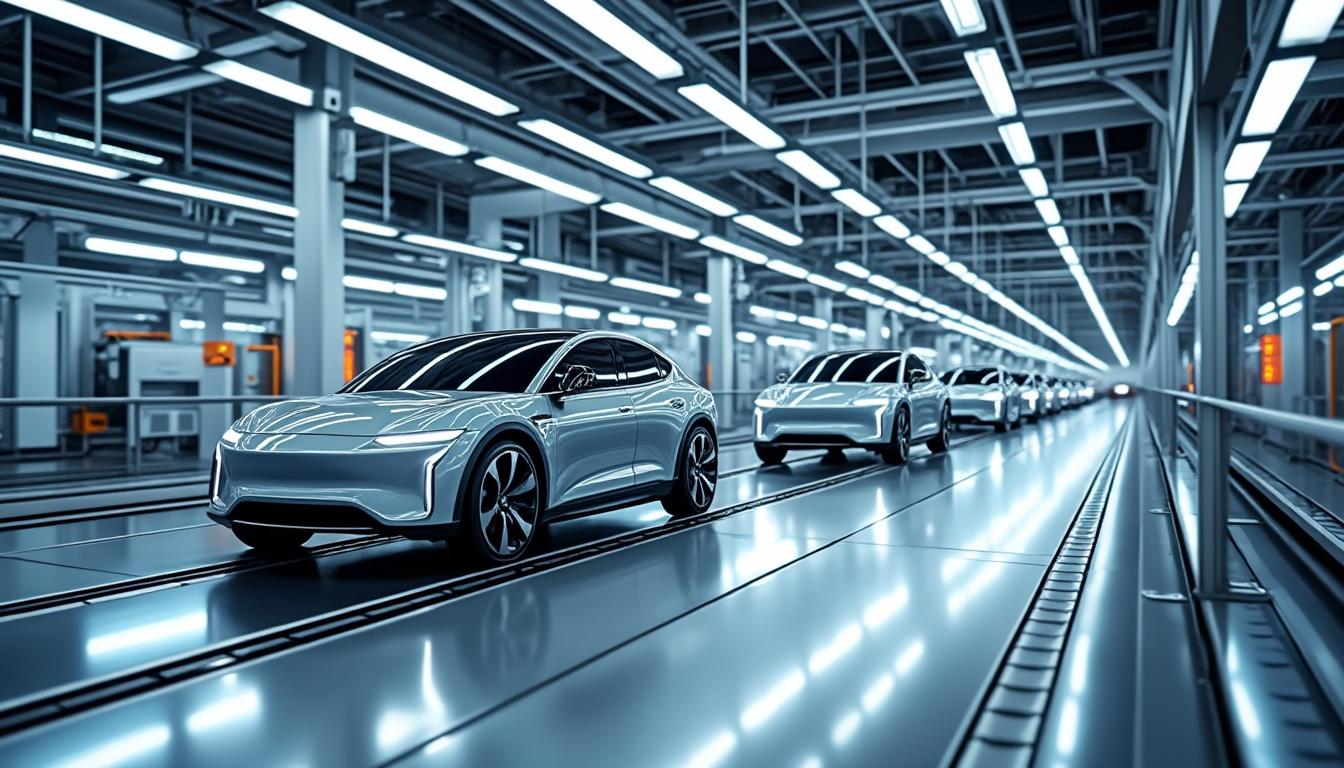
Europe is experiencing a significant increase in electric vehicle sales due to rising fuel prices, tax incentives, and traffic restrictions. In the United States, adoption is slower due to car culture, uneven charging infrastructure, and negative perceptions.
Why Europe is Adopting Electric Vehicles Faster Than the United States
The Rise in Fuel Prices in Europe
The first quarter of 2026 marks a turning point for the European automotive market. Sales of electric and plug-in hybrid vehicles increased by 30% compared to the same period last year. This acceleration coincides with a surge in fuel prices, a direct consequence of geopolitical tensions in the Middle East. European motorists, faced with record fuel costs, are turning massively to alternatives less dependent on fossil fuels.
The impact of this increase is also evident in purchasing behaviors. Fully electric models now account for nearly a quarter of new registrations in the European Union. Local manufacturers, such as Volkswagen and Renault, have adapted their production accordingly, reducing their thermal ranges in favor of decarbonized engines. This transition is supported by strengthened tax incentives since 2024, making the purchase of an electric vehicle more attractive than ever.
However, this dynamic is not limited to economic aspects alone. City dwellers, in particular, see electric vehicles as a solution to traffic restrictions imposed in many European cities. Low-emission zones, extended to hundreds of European cities, are pushing households to anticipate their mobility needs. Charging an electric vehicle, even at home, costs on average three times less than filling up with gasoline, a decisive argument for tight budgets.
The Contrasting Situation in the United States
On the other side of the Atlantic, the picture is radically different. Despite a similar rise in fuel prices, Americans remain reluctant to adopt electric vehicles. Sales increased by only 8% in the first quarter of 2026, a figure well below manufacturers' expectations. Several factors explain this reluctance, starting with the abundance of local oil resources and a car culture rooted in large thermal engines.
The network of charging stations, although developed, remains unevenly distributed. In rural states of the Midwest and South, motorists often travel long distances without the guarantee of finding an operational charging station. This uncertainty hinders purchases, despite federal purchase incentives, which are less generous than in Europe. High-end electric models, such as those from Tesla, dominate the market, but their price reserves them for affluent customers, limiting their mass adoption.
Another obstacle lies in the perception of electric vehicles themselves. For some American consumers, these vehicles symbolize a constraint rather than freedom. Road trips, a tradition deeply rooted in local culture, are perceived as incompatible with the limited range of batteries. Manufacturers are trying to reassure with models offering more than 500 kilometers of range, but skepticism persists. Political polarization also plays a role: in some conservative states, electric vehicles are associated with "punitive ecology," which deters part of the population.
Key Factors in the Difference
Several structural elements explain why Europe and the United States diverge in their adoption of electric vehicles. The first is public policy. The European Union has set a binding target: to ban the sale of new thermal vehicles by 2035. This deadline, combined with targeted subsidies, creates a clear framework for industries and consumers. In the United States, regulations vary from state to state, which blurs the message and slows down investments.
The cost of energy is a second decisive factor. In Europe, taxes on fuels represent a significant portion of the price at the pump, which amplifies the effect of price increases. In the United States, taxes are much lower, mitigating the impact of fluctuations in the barrel price. A European motorist pays an average of 1.80 euros per liter of gasoline, compared to 1.10 dollars (about 1 euro) for their American counterpart. This difference makes electric vehicles much more competitive in the Old Continent.
The size of vehicles also plays a role. Europeans mainly drive city cars or compact sedans, segments where electric vehicles are already mature. Americans prefer pickups and SUVs, models that are heavier and more energy-intensive. Local manufacturers struggle to offer affordable electric alternatives in these categories, which limits choices for consumers. Ford and General Motors have launched electric versions of their flagship models, but their range and price remain deterrents for the general public.
Finally, ecological sensitivity differs between the two continents. In Europe, the fight against global warming has been a political and citizen priority for more than a decade. The younger generations, in particular, integrate this concern into their consumption choices. In the United States, environmental issues are more divisive, and purchasing behaviors remain largely influenced by immediate economic criteria. Sustainability often takes a back seat to purchase price or practicality.
Persistent Challenges in Europe
Despite its progress, Europe is not immune to obstacles. The charging network, although dense in urban areas, remains insufficient in rural areas and along highways. The waiting times at fast-charging stations, especially during holidays, still discourage some motorists. Manufacturers and public authorities are multiplying investments, but full coverage of the territory will take several more years.
Another challenge concerns battery production. Europe still largely depends on Asia for the supply of lithium and cobalt, critical metals whose prices have soared since 2024. Gigafactory projects are multiplying on the continent, but their commissioning takes time. In the meantime, European manufacturers are facing additional costs that are passed on to vehicle prices. A Tesla Model 3, for example, costs on average 15% more in Europe than in the United States, due to customs duties and local standards.
The issue of battery recycling is also starting to arise. With the increase in sales, the volume of end-of-life batteries will explode by 2030. The recycling sectors, still in their infancy, will have to scale up to avoid an environmental crisis. The European Union has adopted strict directives in this matter, but their concrete implementation remains a logistical and technological challenge.
American Opportunities
In the United States, signs of acceleration are visible. Sales of electric vehicles rebounded in April 2026, driven by the arrival of new, more affordable models. Ford launched an electric version of its F-150 pickup for less than $40,000, a competitive price for this segment. General Motors, for its part, is betting on cheaper batteries, reducing dependence on cobalt. These innovations could convince some reluctant motorists.
The federal government has also strengthened its purchase incentives in 2025, with a tax credit of up to $7,500 for low-income households. This measure, combined with the drop in battery prices, makes electric vehicles more accessible. The most progressive states, such as California and New York, have also tightened their emission standards, pushing manufacturers to accelerate their transition. Tesla, which still dominates the market, has opened its supercharger network to other brands, improving the user experience.
However, the main obstacle remains cultural. Americans still associate cars with freedom and power, values embodied by large internal combustion engines. Awareness campaigns struggle to convince, and oil lobbies continue to influence public debate. However, younger generations, more sensitive to climate issues, could tip the balance in the coming years. Their growing demographic weight could force manufacturers to accelerate their electric offerings.
Conclusion: Two Speeds for the Same Transition
Europe and the United States are following distinct but complementary trajectories in their transition to electric vehicles. The Old Continent is betting on proactive policies and strong ecological sensitivity to accelerate adoption, while the United States is advancing at a slower pace, hindered by structural and cultural obstacles. However, the two markets could converge by 2030, driven by regulations and technological innovations.
The coming years will be crucial. In Europe, the priority will be to consolidate the charging network and secure the battery supply. In the United States, the challenge will be to make electric vehicles more accessible and practical for the general public. In both cases, the reduction in production costs and the improvement in battery performance will play a key role.
One certainty emerges: the end of the internal combustion engine is inevitable. Manufacturers that can anticipate this transition will emerge stronger, while laggards risk disappearing. For consumers, the choice between internal combustion and electric will no longer be just a matter of price, but also of lifestyle. Europe has taken a lead, but the United States could well catch up faster than expected.
Key Points
- Sales of electric vehicles increased by 30% in Europe in the first quarter of 2026.
- The rise in fuel prices and tax incentives are promoting the adoption of electric vehicles in Europe.
- In the United States, the adoption of electric vehicles is hindered by car culture and uneven charging infrastructure.
- Public policies and fuel taxes play a key role in the difference in adoption between Europe and the United States.
- Europe faces persistent challenges, particularly in terms of charging infrastructure.
Sources
- NYT International - "Fuel Prices Drive Sales of E.V.s, Just Not in the U.S.". (secondary)
- France Info Économie - "Sales of electric and rechargeable hybrid cars increase by 30% in the first quarter of 2026 in Europe". (secondary)
Transparency: 2 sources (0 primary, 2 secondary). Verification: May 20, 2026.
Truthyx - May 20, 2026