Israel sets legislative elections for October 27, 2026
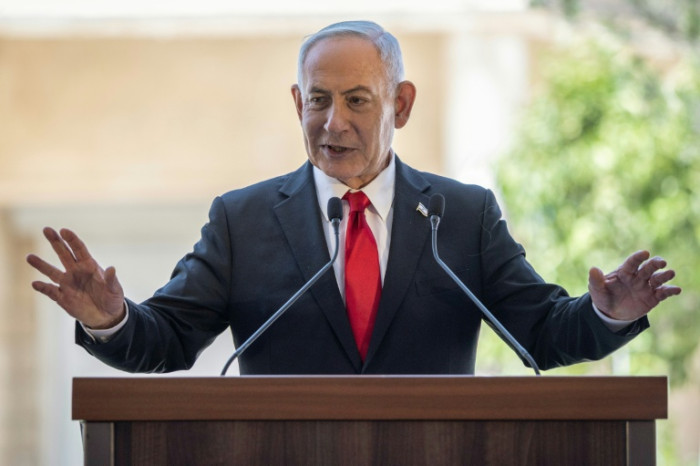
The Israeli Parliament has confirmed the next legislative elections for October 27, 2026, marking the first full four-year term in decades. The vote is seen as a critical test for Benjamin Netanyahu, whose right-wing coalition faces divided public opinion on security, conscription, and governance.
Israel prepares for legislative elections on October 27
The Knesset has officially announced that the next legislative elections will be held on October 27, 2026, adhering to the maximum legal deadline. This vote will mark the end of a full four-year parliamentary term, a first in Israel in several decades. The current Parliament, whose mandate expires on July 17, will remain in office until the new assembly is installed.
The electoral process will begin on July 19, one hundred days before the vote. On that date, senior civil servants, military personnel, and members of the security forces wishing to run for office will be required to resign from their posts. Campaign rules will take effect ten days later, including a ban on the use of public funds for partisan purposes.
A vote centered on Netanyahu
These elections are seen as a referendum on the leadership of Benjamin Netanyahu, outgoing Prime Minister and a dominant figure in Israeli politics. At 76 years old, he holds the record for the longest tenure in the position, with several non-consecutive terms. He has already announced his candidacy, stating he aims to "win" this vote, which could be the most decisive of his career.
At the head of a coalition considered the most right-wing in the country’s history, Netanyahu has accelerated the adoption of several laws in recent weeks, seeking to consolidate his position ahead of the vote. He has also mentioned the possibility of forming a "broad national government," excluding any alliance with Arab parties or a marked ideological orientation. This strategy aims to refocus his message around national unity rather than partisan divisions.
Key issues in a tense campaign
Security dominates the debate, in a context marked by the war in Gaza, tensions with Hezbollah, and strained relations with Iran. The Hamas attack on October 7, 2023, which resulted in over 1,200 deaths and 251 hostages, remains a deep trauma for Israeli society, strongly influencing electoral dynamics.
Another divisive issue is the conscription of ultra-Orthodox men. Religious parties, traditional allies of Netanyahu, threaten to bring down the government if their voters are not granted an exemption from military service. Conversely, a portion of the population and the military advocate for expanding conscription, arguing that years of conflict have depleted the human resources of the armed forces.
Judicial reforms, initiated before the war in Gaza, as well as corruption cases involving Netanyahu, also fuel tensions. Uncertainty over the future of Gaza and post-conflict management adds a layer of complexity to an already fragmented political landscape.
The forces at play
Facing Netanyahu, several figures are emerging as serious challengers. Yair Lapid, a secular centrist, and Naftali Bennett, a right-wing Orthodox leader, are among the main opponents. Former IDF Chief of Staff Gadi Eisenkot is also gaining visibility in polls, representing an alternative for part of the electorate.
Ultra-Orthodox parties, historic allies of Likud, primarily defend the interests of their communities, particularly on the issue of military service exemptions. Arab parties, which represent about one-fifth of the electorate, focus on defending the rights of non-Jewish minorities, though their voter turnout has traditionally been lower than that of Jewish voters.
A strict electoral framework
The Central Elections Committee, led by Judge Noam Solberg, confirmed as early as April 2026 that the vote would take place on October 27 if the Knesset completed its term. Although the summer parliamentary session ends on July 17, lawmakers will retain their positions until the new assembly is installed.
Israeli electoral rules impose strict restrictions on candidates. Article 7(a) of the Basic Law prohibits lists or individuals who deny Israel’s Jewish and democratic character, incite racial hatred, or support armed struggle against the state. Any exclusion must be approved by a third of the members of the Central Elections Committee and can be appealed to the Supreme Court.
An uncertain political landscape
Opinion polls suggest that Netanyahu’s coalition could struggle to retain its majority. His opponents, however, do not appear capable of presenting a unified alternative. Since the October 7, 2023, attack, Israel’s political landscape has been marked by increased fragmentation and deep polarization.
Israeli society, traditionally structured around a left-right divide, is undergoing a period of questioning. Some observers note a shift toward more radical positions, fueled by a sense of insecurity and a growing demand for firmness in the face of external threats.
- The Israeli legislative elections are set for October 27, 2026, the legal deadline.
- This vote is seen as a test for Benjamin Netanyahu, outgoing Prime Minister and a historic figure in Israeli political life.
- The main issues include security, the conscription of ultra-Orthodox individuals, and judicial reforms.
- Netanyahu faces rivals such as Yair Lapid, Naftali Bennett, and Gadi Eisenkot.
- Polls indicate a decline in support for Netanyahu amid a fragmented political landscape.
Sources
- Radio Canada Monde - "The Israeli elections 'the most important of the last 30 years'". (secondary)
- Hindustan Times World - "Israel elections to be held on October 27, Netanyahu to face tough challenge". (secondary)
- Al Jazeera Arabic Top - "The countdown begins: How is Israel preparing for the October elections?". (secondary)
- Bangkok Post World - "Israel elections to be held on October 27: parliament". (secondary)
- G1 Mundo - "Israel schedules election for October amid Netanyahu's popularity crisis following wars". (secondary)
- ABC Internacional - "Neither Israel nor Palestine: Is a single state viable?". (secondary)
- Observador PT - "6 PM News. Elections in Israel scheduled for October 27". (secondary)
Transparency: 7 sources (0 primary, 7 secondary). Verification: July 17, 2026.
Truthyx - July 17, 2026