Trump mediates fragile Israel-Hezbollah ceasefire amid Lebanon tensions
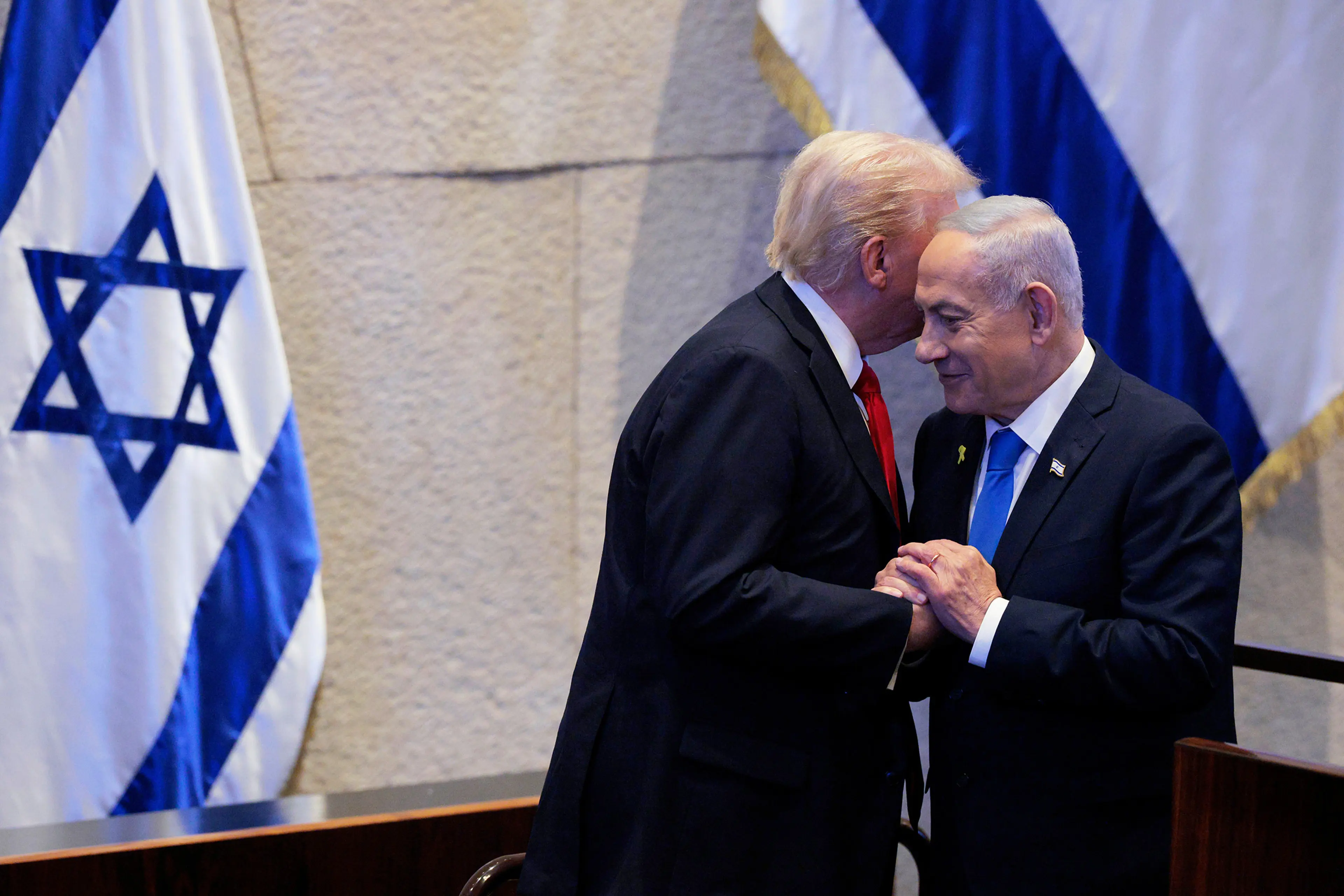
Former US President Donald Trump announced a ceasefire between Israel and Hezbollah, but its effectiveness is questioned as hostilities continue. The mediation aims to ease tensions in Lebanon and support broader negotiations with Iran.
Trump mediates Israel-Hezbollah ceasefire amid Lebanon tensions
Washington, June 1, 2026 – US President Donald Trump announced on Monday that he had convinced Israel and Hezbollah to suspend their mutual attacks. This mediation comes amid heightened tensions in Lebanon, where the risks of military escalation persist despite optimistic statements.
Trump stated that he had obtained verbal commitments from both parties during telephone exchanges with Israeli Prime Minister Binyamin Netanyahu and representatives of Hezbollah. According to him, these discussions mark a major diplomatic breakthrough to prevent a full-scale war in Lebanon. The details of the agreement remain unclear, but Trump mentioned a truce aimed at defusing hostilities.
A statement contested by the facts
Less than twenty-four hours after this declaration, Israeli strikes targeted southern Lebanon, while Hezbollah retaliated by firing rockets towards northern Israel. These exchanges of fire call into question the immediate effectiveness of American mediation. Neither party has officially confirmed the existence of a ceasefire, casting doubt on the actual scope of the commitments obtained by Trump.
Israel justified its strikes as necessary to respond to rocket fire from Lebanon. Hezbollah denounced a violation of Lebanese sovereignty and promised a proportional response. Analysts note that these clashes are part of a dynamic of mutual reprisals, where each side seeks to impose a balance of power before any potential negotiations.
Political reactions and divisions in Israel
Trump's intervention has caused turmoil within the Israeli government coalition. Several ministers have expressed their discontent with what they perceive as interference in the country's military strategy. Prime Minister Netanyahu, already weakened by internal dissent, is under pressure to justify this truce to his most radical allies.
Israeli officials have indicated that Trump exerted direct pressure on Netanyahu, accusing him of compromising ongoing negotiations with Iran. These tensions reflect a growing divergence between Washington and Tel Aviv on the management of the Lebanese crisis. For some members of the Knesset, the halt of military operations weakens Israel's position against Hezbollah, considered an existential threat.
Impact on negotiations with Iran
Trump's mediation is part of a broader context of talks with Iran, which have been suspended for several weeks. Tehran has threatened to escalate the conflict by blocking the Strait of Hormuz, a strategic maritime route for oil transport. This verbal escalation follows Israeli strikes on Iranian positions in Syria and Lebanon.
Trump, however, maintained an optimistic tone, stating that discussions with Iran were progressing at a sustained pace. He mentioned the possibility of an interim agreement aimed at reducing regional tensions. Iranian negotiators, for their part, have conditioned the resumption of talks on a definitive end to hostilities between Israel and Hezbollah.
The agreements and treaties at stake
This crisis is set within a complex legal framework, marked by several United Nations resolutions. Resolution 1701 of 2006, which ended the thirty-three-day war between Israel and Hezbollah, provided for the disarmament of the Shiite militia and the deployment of international forces in southern Lebanon. These provisions have never been fully implemented, leaving the field open to repeated violations of the ceasefire.
Furthermore, the Abraham Accords, signed in 2020 under the aegis of the United States, normalized relations between Israel and several Arab countries. These agreements could be threatened if the conflict in Lebanon were to spread, particularly due to the support provided by some Gulf States to Hezbollah. The current tensions risk undermining these diplomatic advances, already weakened by successive wars in Gaza.
A fragile truce and persistent uncertainties
Analysts point out that ceasefires in the Middle East are often short-lived. Previous agreements between Israel and Hezbollah, such as the one in 2006, have rarely lasted more than a few weeks. Mutual mistrust, fueled by decades of conflict, makes any negotiation particularly difficult.
Hezbollah, backed by Iran, has a significant military arsenal, estimated at over 150,000 rockets. Israel, for its part, has carried out preemptive strikes against strategic sites in Lebanon, seeking to weaken the militia's capabilities. This arms race fuels a cycle of violence that seems difficult to break.
Humanitarian and regional stakes
The Lebanese population, already struggling with an unprecedented economic crisis, is bearing the full brunt of these tensions. More than 80,000 people have been displaced since the start of hostilities in April 2026. Civilian infrastructures, including hospitals and schools, have been damaged by airstrikes.
Neighboring countries, such as Syria and Jordan, fear an extension of the conflict. Jordan has strengthened its military presence on its border with Syria, while Damascus has accused Israel of violating its airspace. These developments could lead to a regionalization of the conflict, with repercussions on the stability of the entire Middle East.
Conclusion: Uncertain Prospects
The mediation by Donald Trump offers a glimmer of hope in a context marked by military escalation. However, the persistent violence and the contradictory statements from the stakeholders highlight the fragility of this truce. Several scenarios remain possible.
One hypothesis would see the consolidation of the ceasefire, with a firmer commitment from both sides under international pressure. This could pave the way for broader negotiations, including Iran and other regional actors. Such an outcome would, however, depend on Trump's ability to maintain his influence over Netanyahu and Hezbollah.
A second scenario envisages a resumption of hostilities if one of the two sides deems the truce unfavorable. Hezbollah could seek to test Israeli determination, while Israel could relaunch preemptive strikes to weaken the militia. Such an escalation could derail talks with Iran and plunge the region into a prolonged crisis.
Finally, a third possibility lies in a precarious status quo, where violence continues at low intensity. This situation, already observed in the past, would allow both parties to maintain military pressure without crossing the threshold of open war. However, it would leave the Lebanese population in permanent insecurity.
Whatever the outcome, this crisis highlights the importance of international mediation mechanisms. United Nations resolutions and regional agreements, although often violated, remain the only tools capable of preventing a generalized conflagration. Their effective implementation will depend on the political will of the great powers and local actors, in an always precarious balance.
Key Points
- Trump announced a ceasefire between Israel and Hezbollah.
- Hostilities continued despite the ceasefire announcement.
- The mediation is part of broader negotiations with Iran.
- The ceasefire's effectiveness and durability are uncertain.
- The situation has significant humanitarian and regional implications.
Sources
- Al Jazeera World - "Iran war day 95: Trump pushes Lebanon truce after Tehran vows to end talks". (secondary)
- Le Monde - "In Israel, war as the only political and strategic horizon". (secondary)
- France 24 English - "Trump says Iran talks moving fast despite threat to widen war". (secondary)
- Al Jazeera World - "President Trump attempts to end hostilities in Lebanon". (secondary)
- Bloomberg - "Trump Aims to Ease Lebanon Tensions to Extend Iran Talks". (secondary)
- Courrier International - "Trump announces a vague truce in Lebanon". (secondary)
- France 24 English - "Israel, Hezbollah exchange fire despite Trump announcement". (secondary)
- The Hindu World - "West Asia war LIVE: Israel military says intercepted projectiles from Lebanon". (secondary)
- Folha Mundo - "Podcast discusses Israel's offensive in Lebanon and comparisons with the Gaza Strip". (secondary)
- Euronews EN - "Israel and Hezbollah exchange fire despite Trump announcing breakthrough agreement". (secondary)
Transparency: 10 sources (0 primary, 10 secondary). Verification: June 2, 2026.
Truthyx - June 2, 2026