Fourth Escape: A Chinese Dissident in South Korea
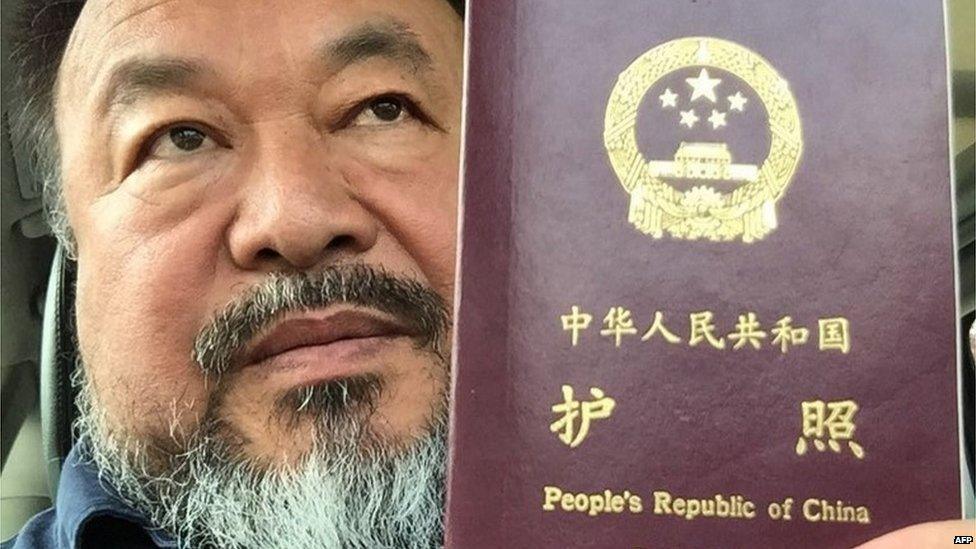
Dong Guangping, a Chinese dissident, attempts to flee his country for the fourth time. After previous failures, he reaches South Korea, where his asylum request is under review.
Fourth Escape: A Chinese Dissident in South Korea
A Fourth Attempt to Flee
The salty air of the Yellow Sea clings to the skin like a second layer, thick and tenacious. Dong Guangping, 68, felt this humidity gnaw at his bones for thirty hours, huddled in an inflatable dinghy. The outboard motor, bought second-hand from a fisherman in Qingdao, sputtered gasoline fumes that mixed with the sea spray. He had left the Chinese coast on the night of May 20, 2026, taking advantage of a fog so dense that it swallowed the lights of the patrol boats like a shroud.
This was not his first crossing. Three times before, he had tried to flee China. The first, in 2016, to Thailand, where the authorities intercepted him before he could even set foot on Thai soil. The second, in 2018, to Taiwan, where a cargo ship flying the Panamanian flag was supposed to drop him off discreetly. But the Taiwanese coast guard, warned by Beijing, turned him back to the mainland. The third, in 2022, to Vietnam, ended with an arrest in Hanoi and a forced repatriation, under the eyes of smiling Chinese diplomats.
This time, Dong had chosen South Korea. A risky choice. The waters between China and the Korean peninsula are among the most surveilled in the world, crisscrossed by South Korean frigates and Chinese drones. Yet, on the morning of May 22, a South Korean fisherman spotted him about ten nautical miles from Jeju Island, shivering, his lips chapped by the salt. The coast guard pulled him aboard, wrapped in a survival blanket that crackled like aluminum foil.
Interrogation in South Korea
Dong Guangping is now in an administrative detention center in Seoul, a grayish building with windows barred by metal blinds. The walls smell of disinfectant and instant coffee, a scent that reminds him of the Chinese police stations where he spent months in detention. The South Korean authorities have been questioning him since his arrival, seeking to establish his identity and the reasons for his flight.
The asylum procedure in South Korea is long and fraught with obstacles. Applicants must prove that they risk persecution in their country of origin. For Dong, the evidence is plentiful. In China, he was sentenced to three years in prison in 2014 for "subversion of state power," after participating in demonstrations in favor of human rights. Released, he continued to campaign, distributing leaflets and organizing clandestine meetings. In 2020, he was placed under house arrest, his movements limited to a perimeter of five kilometers around his home in Zhengzhou.
His lawyers, based in Hong Kong and in exile in the United States, have sent the South Korean authorities hundreds of pages of documents: NGO reports, press articles, testimonies from relatives. But Beijing has already made it known, through unofficial channels, that Dong is a "dangerous criminal" and that his asylum request would be considered an "interference in China's internal affairs."
Hopes and Uncertainties
In a small apartment in Taipei, where he has lived since 2021, Dong's friend, Li Wei, looks at a map pinned to the wall. Red pins mark the three failed escape attempts, a blue one the one that, perhaps, will succeed. Li holds a cup of oolong tea between his fingers, its woody aroma slowly spreading through the room. "Dong always said he would not give up," he murmurs. "Even after the third time, when they beat him in prison, he repeated: *I will try again*."
Dong's supporters are mobilizing. In Seoul, an online petition has gathered more than 50,000 signatures in less than a week, asking the South Korean authorities to grant him asylum. Demonstrations have taken place in front of the Chinese embassy, where activists held banners with his portrait, surrounded by the words "Free Dong Guangping." In Washington, lawmakers have written a letter to the South Korean president, urging Seoul not to give in to Beijing's pressure.
Yet, the uncertainties weigh heavily. South Korea has complex economic and diplomatic relations with China. In 2026, the two countries signed a historic trade agreement, and Seoul depends on Beijing for crucial supplies of rare earths. Granting asylum to Dong could be seen as a provocation. Already, rumors are circulating that the South Korean authorities are considering transferring him to a third country, such as Canada or Australia, to avoid a diplomatic incident.
Dong, for his part, waits. In his cell, he is allowed one hour of exercise per day, in a concrete courtyard where the sky is reduced to a pale blue rectangle. He listens to the sounds of the city, muffled by the walls: the honking of cars, the crackling of neon signs, the murmur of guards talking about football. Sometimes, he closes his eyes and imagines the streets of Zhengzhou, the smell of grilled mutton skewers at the night stalls, the laughter of his daughter, whom he has not seen for five years.
Conclusion: A Destiny Hanging in the Balance
Dong Guangping's escape is much more than a personal flight. It embodies the desperate struggle of those in China who dare to defy the power. His case recalls that of Chen Guangcheng, the blind lawyer who took refuge in the U.S. Embassy in 2012, or Liu Xiaobo, the Nobel Peace Prize laureate who died in detention in 2017. Like them, Dong has become a symbol, a thorn in the side of the regime.
His future will depend on several factors. First, on South Korea's willingness to resist Chinese pressure. Then, on international mobilization, which could tip the balance in his favor. Finally, on his own resilience. At 68, after three failures and years in prison, Dong still has the strength to fight.
One thing is certain: whatever the outcome, his story will not end there. Chinese dissidents, like dandelion seeds, know how to travel far, carried by the wind of hope. Even if the ground where they land is not always welcoming.
Key Points
- Dong Guangping attempts to flee China for the fourth time.
- He reaches South Korea after a perilous crossing.
- His asylum request is under review.
- South Korean authorities face diplomatic pressures from China.
- His case raises questions about international relations and human rights.
Sources
- NYT International - "A Dissident Escapes China by Rubber Boat and Lands in South Korea". (secondary)
- Liberation - "'Thirty hours at sea' on an inflatable boat: a dissident flees China for the fourth time". (secondary)
Transparency: 2 sources (0 primary, 2 secondary). Verification: May 27, 2026.
Truthyx - May 27, 2026