Israel captures Beaufort Castle in Lebanon, escalation against Hezbollah
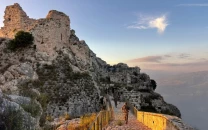
Israel has captured Beaufort Castle in Lebanon, a strategic site in the conflict against Hezbollah. This offensive has major military, humanitarian, and political implications for the region.
Israel captures Beaufort Castle in Lebanon, escalation against Hezbollah
Historical and strategic context
The Beaufort Castle, a 12th-century fortress, overlooks southern Lebanon and northern Israel. Built during the Crusades, it has served as a key military position in multiple conflicts. Israel occupied it between 1982 and 2000, before withdrawing under international pressure.
This site symbolizes a strategic advance in the region. Located at an altitude of about 700 meters, it offers an unobstructed view of the Litani Valley and Galilee. Hezbollah used it as an observation and attack launch point since the Israeli withdrawal.
The recapture of the castle could shift the balance of power in southern Lebanon. Military analysts estimate that its capture would allow Israel to better control Hezbollah's movements near the border.
Details of the Israeli offensive
The Israeli army announced the capture of Beaufort Castle on May 31, 2026. This operation is part of a larger offensive aimed at weakening Hezbollah in southern Lebanon. Israeli forces advanced to the Nabatiyeh region, marking their deepest incursion since 1996.
Evacuation orders were issued for civilians south of the Zahrani River. This area, located about 40 kilometers from the Israeli border, includes several villages and the city of Tyre. Israeli authorities justify these measures by the need to protect populations from the fighting.
Airstrikes accompanied the ground advance. The city of Tyre suffered intense bombardment, with impacts reported near Hiram Hospital. Thirteen medical staff members were reportedly injured, and significant material damage was reported.
Reactions and statements
Israeli Prime Minister Benjamin Netanyahu called the capture of Beaufort Castle a decisive turning point. He emphasized that this operation strengthened the security of Israeli civilians against Hezbollah attacks. Defense Minister Israel Katz presented photographs to confirm the military advance.
Lebanese authorities condemned the escalation. The Ministry of Health denounced the strikes near Hiram Hospital, calling them a violation of international law. Hezbollah has not yet officially reacted to the loss of the castle, but sources close to the movement mention a proportional response.
The international community remains divided. Some countries call for an immediate ceasefire, while others support Israel's right to defend itself. Negotiations between the United States and Iran for a regional agreement could influence the course of events.
Humanitarian and political impact
More than 3,371 people have reportedly been killed since the start of hostilities on March 2, 2026. One million Lebanese have been displaced, according to local authorities. Civilian infrastructures, including hospitals and roads, are suffering significant damage.
The Lebanese economy, already weakened, risks further deterioration. The tourism and agriculture sectors, vital for the south of the country, are particularly affected. Humanitarian organizations warn of an imminent food and medical crisis.
Politically, the capture of Beaufort Castle could strengthen Israel's position in potential negotiations. Hezbollah, militarily weakened, could seek to compensate with asymmetric actions. The stability of the Lebanese government, already precarious, is threatened.
Future prospects
Several scenarios could unfold in the coming weeks. An intensification of the fighting remains possible, with an extension of Israeli operations to the north. Hezbollah could increase rocket attacks to maintain pressure.
A negotiated ceasefire seems unlikely in the short term. The conditions set by Israel, notably the withdrawal of Hezbollah from the border area, are deemed unacceptable by the Lebanese movement. International mediations could focus on temporary humanitarian measures.
The regional situation could evolve depending on discussions between the United States and Iran. A comprehensive agreement on the Middle East could include guarantees for Lebanon. However, the differences between the parties make any prediction uncertain.
Conclusion
The capture of Beaufort Castle marks a significant step in the conflict between Israel and Hezbollah. This military advance could redefine regional dynamics, with major humanitarian and political consequences.
The coming days will be crucial in assessing the extent of the escalation. Hezbollah's reactions and international pressures will play a key role in the evolution of the situation. The international community will have to find a balance between Israel's security and the protection of Lebanese civilians.
The future of Lebanon will partly depend on the ability of local and international actors to avoid a total war. Diplomatic efforts will need to focus on sustainable solutions while addressing humanitarian emergencies.
Key Points
- Israel has captured Beaufort Castle, a strategic site in Lebanon.
- This offensive aims to weaken Hezbollah and has major regional implications.
- The operation has caused massive population displacement and damage to civilian infrastructure.
- The international community is divided on how to respond to this escalation.
- Future prospects include a possible intensification of fighting or ceasefire negotiations.
Sources
- BBC World - "Israel seizes castle in Lebanon as it expands ground offensive". (secondary)
- NPR International - "Israel seizes medieval castle as it expands major offensive in southern Lebanon". (secondary)
- Le Figaro - "Liban : la prise de la forteresse de Beaufort est un «tournant décisif», selon Netanyahou". (secondary)
- France 24 English - "Israel seizes strategic Beaufort Castle in Lebanon, issues new evacuation orders". (secondary)
- NYT International - "Israel Captures Crusader Castle That Symbolized Its Long Lebanon Occupation". (secondary)
- El Pais World - "Israel se hace con el histórico Castillo de Beaufort en su avance sobre la ocupación del sur de Líbano". (secondary)
- O Globo Mundo - "Israel toma fortaleza estratégica no sul do Líbano e amplia ofensiva contra o Hezbollah". (secondary)
- Times of India World - "Israel captures strategic Lebanon castle after days of fighting despite ceasefire". (secondary)
- Folha Mundo - "Israel diz ter capturado o Castelo de Beaufort, no sul do Líbano". (secondary)
- Sky News World - "Israel seizes Crusades-built fortress in Lebanon as it expands offensive". (secondary)
Transparency: 10 sources (0 primary, 10 secondary). Verification: May 31, 2026.
Truthyx - May 31, 2026