Booba convicted for cyber harassment: legal analysis
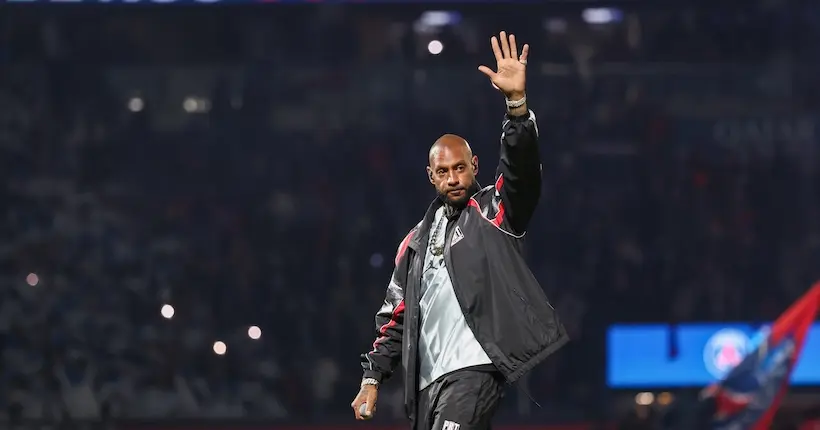
The Paris Judicial Court sentenced Booba to a three-month suspended prison sentence for cyber harassment and racist abuse against a journalist. This decision raises questions about freedom of expression and the responsibility of public figures on social media.
Booba convicted for cyber harassment: analysis of legal and societal implications
Background of the case
The Paris Judicial Court rendered a decision on April 1, 2026, concerning Élie Yaffa, known as Booba. The 49-year-old rapper was prosecuted for cyber harassment and racist abuse. These accusations were part of an online campaign against Linh-Lan Dao, a journalist specializing in fact-checking.
The events date back to 2024. Linh-Lan Dao had published an article analyzing Booba's positions on scientific and societal issues. The artist then reacted with a series of posts on the X platform, formerly Twitter. These messages allegedly triggered a wave of online harassment against the journalist.
The hearing on April 1, 2026, was held in Booba's absence. The court was also to examine similar prosecutions involving the essayist Tristan Mendès France, although this procedure followed a separate course.
Details of the conviction
The court sentenced Booba to a three-month suspended prison sentence. This conviction is based on two main charges: cyber harassment and racist abuse. The magistrates retained the qualification of aggravated moral harassment, as provided by Article 222-33-2-2 of the Penal Code.
The judges emphasized the particular role played by the artist in this case. Booba was qualified as a "pack leader" by the court, a legal term designating a person who organizes or actively encourages a harassment campaign. This qualification is based on the considerable influence of the rapper, who has six million followers on social media.
The decision also mentions the nature of the remarks made. The incriminating messages contained elements qualified as sexist and essentialist by the court. Essentialism, a recent legal concept, refers to reducing a person to a supposed intrinsic characteristic, often related to their origin or gender.
Booba immediately appealed this decision. The appeal procedure suspends the execution of the sentence, in accordance with the provisions of Article 506 of the Code of Criminal Procedure. A new hearing will therefore have to be held before the Paris Court of Appeal.
Reactions and legal consequences
Booba's conviction has sparked debates on the limits of freedom of expression, particularly in the context of social media. Some observers point out that this decision could set a precedent for influential public figures. The court indeed considered that the accused's notoriety aggravated the impact of his actions.
Linh-Lan Dao, a civil party in this procedure, did not wish to speak publicly at this time. However, her lawyer indicated that this decision marked an important step in the legal recognition of cyber harassment. He recalled that victims of such campaigns often suffer lasting psychological consequences.
On the defense side, Booba's lawyers announced their intention to contest the qualification of "pack leader." They argue that their client only exercised his right to criticism, without directly inciting harassment. This line of defense is based on recent case law concerning the freedom of expression of public figures.
Associations fighting against racism and online violence welcomed this conviction. They see it as progress in the recognition of offenses specific to social media. However, some are calling for tougher penalties for cases of cyber harassment involving influential figures.
Implications for freedom of expression
This case raises complex questions about the balance between freedom of expression and protection against online harassment. The court had to decide between the right to criticism, even virulent, and the limits not to be crossed. The qualification of "pack leader" could set a precedent for similar cases.
Legal experts are questioning the criteria for distinguishing simple criticism from incitement to harassment. The size of the accused's audience seems to have played a decisive role in this case. The court considered that six million subscribers conferred a particular responsibility on Booba.
This decision could influence behavior on social media. Public figures may now measure their words more carefully, for fear of being prosecuted for cyber harassment. However, some fear a deterrent effect on freedom of tone, particularly in current affairs debates.
The legislator may be led to clarify the contours of the offense of cyber harassment. The current law, introduced in 2014 and strengthened in 2018, leaves room for interpretation by judges. This case could serve as a reference for future judicial decisions in this matter.
Analysis of the reasons for the conviction
The court based its decision on several factual and legal elements. The incriminating messages were analyzed in their global context. The judges considered that the accumulation of publications, even taken individually, constituted a harassment campaign.
The classification of racist insults is based on Article 33 of the 1881 Press Freedom Law. The court found that certain remarks specifically targeted Linh-Lan Dao's origin. This classification is particularly serious because it carries heavier penalties than simple insults.
The sexist aspect of the messages was also taken into account. The court noted remarks that reduced the journalist to her gender, a practice qualified as essentialization. This notion, still little used in French jurisprudence, could gain importance in online harassment cases.
The notion of 'ringleader' was at the heart of the judgment's reasoning. The judges ruled that Booba had knowingly exposed Linh-Lan Dao to a wave of harassment. This classification makes it possible to sanction not only direct acts but also the organization or encouragement of harassment campaigns.
Procedural Perspectives
The appeal process promises to be complex. The appeal court will have to re-examine all the elements of the case. It could confirm, reverse, or modify the court's decision. Booba's lawyers are likely to focus their defense on the 'ringleader' classification and the interpretation of the remarks made.
The appeal suspends the execution of the sentence but not the possible civil reparation measures. Linh-Lan Dao could therefore obtain damages even if the criminal conviction were overturned. This dissociation between criminal and civil aspects is provided for by the Code of Criminal Procedure.
Other procedures could be initiated following this case. Associations could join as civil parties to seek reparation for collective harm. Some indirect victims of harassment could also take legal action.
The jurisprudence arising from this case could influence other ongoing cases. Several public figures are currently being prosecuted for similar acts. The judges could draw inspiration from this decision to rule on these cases.
Conclusion: towards a redefinition of online responsibilities?
This conviction marks a turning point in the legal recognition of offenses committed on social networks. It raises the question of the responsibility of influential figures in the spread of online harassment. The concept of 'ringleader' could become a major legal tool to combat organized campaigns.
The Booba case illustrates the challenges posed by new forms of communication. Social networks have created a space where remarks can have a multiplied impact. Courts must now adapt their analytical framework to these technological realities.
The appeal decision will be particularly awaited. It could clarify the contours of cyber harassment and freedom of expression. In the meantime, this conviction sends a strong signal to social network users, particularly public figures.
The coming months could see an increase in complaints about cyber harassment. Victims might feel encouraged to file complaints, while potential perpetrators might measure their remarks more carefully. This case could thus contribute to stricter regulation of online exchanges.
It remains to be seen how social network platforms will react to this decision. Some could strengthen their moderation measures to avoid being associated with harassment campaigns. This case could thus have repercussions well beyond the judicial world.
Key Points
- Booba sentenced to three months suspended prison for cyber harassment and racist insults
- 'Ringleader' classification upheld by the court
- Debates on freedom of expression and the responsibility of public figures
- Potential impact on online behavior and future judicial decisions
- Questions about the balance between criticism and harassment
Sources
- Le Figaro - "The rapper Booba sentenced to 3 months suspended prison for cyber harassment and insults". (secondary)
- Le Monde - "Booba sentenced to three months suspended prison for online harassment and racist insults against journalist Linh-Lan Dao". (secondary)
- Telerama Musique - "Booba sentenced for cyber harassment and racial insults against a journalist from France Télévisions". (secondary)
Transparency: 3 sources (0 primary, 3 secondary). Verification: June 2, 2026.
Truthyx - June 2, 2026