Bear attack in Fukushima: four injured in a factory
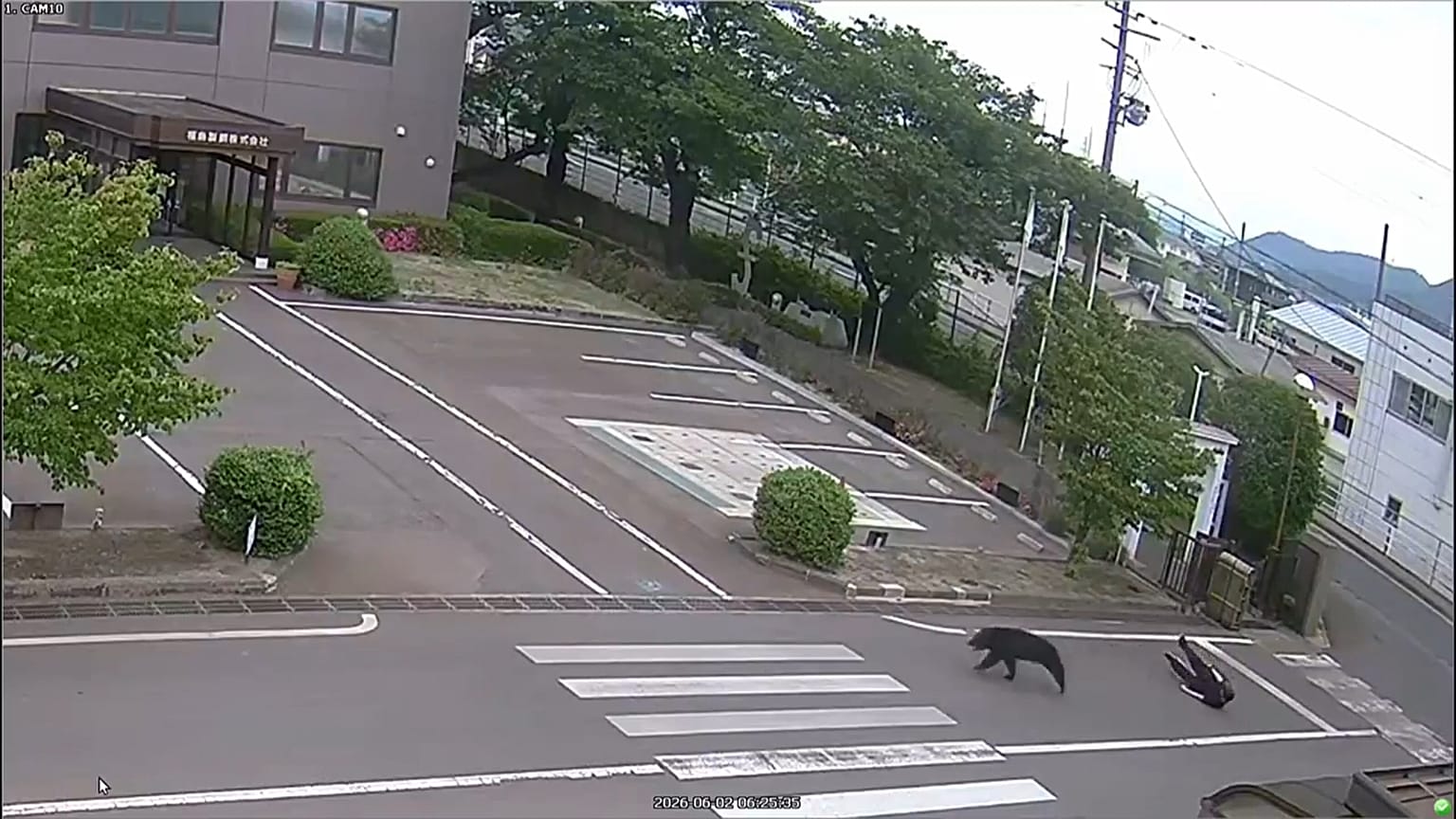
A black bear attacked four people in Fukushima, including three employees of a steel factory and an octogenarian. Authorities are struggling to locate the animal despite deploying police and rescue forces.
Bear attack in Fukushima: four injured in a factory and a residential area
A black bear caused panic on Tuesday in Fukushima Prefecture, northeastern Japan. The animal attacked four people, including three employees of a steel factory and an octogenarian in her neighborhood. Local authorities are still struggling to locate it, despite the deployment of police and rescue forces.
The incident began around 8:30 AM near the Fukushima Steel Works, in the Sasakino district. Surveillance footage shows the bear chasing a young man near the factory entrance. The employee tripped and fell to the ground before being bitten multiple times. The bear did not stop there: it entered the factory premises and injured a second employee, a man in his sixties.
Tracking still ongoing after several hours
Rescue teams were quickly alerted after the first attacks. The Fukushima firefighters confirmed that the two factory employees had minor injuries, mainly bites and bruises. A third man, working for a neighboring company, was attacked shortly after. This man, also in his sixties, suffered similar injuries.
The situation worsened when a local resident, an 82-year-old woman, encountered the animal. She was bitten on the leg and arm before taking refuge in her home. Her condition, considered moderate, required hospital treatment. The other three victims were treated on site or in medical centers.
Despite the intervention of the authorities, the bear was not captured by the end of the day. The police cordoned off the industrial and residential area, and specialized teams were dispatched. Two nearby schools were closed as a precaution, and residents were advised to stay indoors.
An increase in incidents in Japan
This incident is part of an alarming trend observed in recent years in Japan. In 2026, the authorities recorded more than 230 bear attacks, resulting in 13 deaths. These figures constitute a record since the beginning of statistics, far exceeding previous figures. Experts attribute this increase to factors such as the reduction of natural habitats and the search for food in urban areas.
Fukushima Prefecture, affected by the 2011 earthquake, tsunami, and nuclear accident, has a difficult coexistence between humans and wild animals. The surrounding forests, less frequented since 2011, offer refuge to bears. Milder winters and less abundant harvests also push bears closer to homes.
Reactions from authorities and emergency measures
The Ministry of the Environment has emphasized the urgency of strengthening prevention measures. Awareness campaigns inform the public about the risks and behaviors to adopt in case of encountering a bear. Among the recommendations: carrying bells or whistles in the forest, and avoiding wooded areas at dawn and dusk, periods of bear activity.
The Fukushima authorities have announced the strengthening of patrols in high-risk areas. Non-lethal traps are being installed, and drones could be used to track the animal. Capturing the bear remains a priority, but operations are complicated by the density of urban and industrial sectors.
Testimonies from residents and climate of fear
Residents of Sasakino have expressed their concern after this attack. Several have already spotted bears in the neighborhood in recent months, without imagining such an incident. A mother confided that her children have been deprived of outdoor recreation since the schools were closed.
An employee of Fukushima Steel Works described a scene of chaos during the attack. He explained that the employees were caught off guard, without a clear protocol. The company will review its protection measures, including installing reinforced fences and training its staff.
Historical context and environmental issues
Human-bear conflicts are not new in Japan. The country has two species of bears: the Asian black bear (Honshu) and the brown bear (Hokkaido). Attacks have always existed, but their frequency has increased in recent decades. In 2020, 158 attacks were recorded, already a high figure.
Experts believe that deforestation and urban expansion play a key role in this issue. Deprived of their habitat, bears are getting closer to cities to feed. Household waste and crops become easy targets. The aging rural population also limits surveillance and protection capabilities.
Prospects and proposed solutions
Faced with this situation, the Japanese authorities are considering several options to limit the risks. The first is to improve waste management in high-risk areas to avoid attracting bears. Secured containers and cleaning campaigns are already in place in some prefectures, but their generalization will take time.
Another solution lies in the creation of ecological corridors, allowing bears to move between forest areas without crossing inhabited sectors. These projects, already tested in certain regions, however, require significant investments and coordination between different local communities.
Finally, scientists are advocating for a better understanding of bear behavior. Studies are underway to analyze their movements and identify areas where the risk of encountering humans is highest. This data could help adapt prevention measures and avoid new tragedies.
Conclusion: towards safer cohabitation?
The attack on Tuesday in Fukushima is a stark reminder of the challenges posed by the cohabitation between humans and wild animals in the region. While authorities are multiplying initiatives to limit risks, the task remains immense. Capturing the bear responsible for the attacks will be a first step, but it will not be enough to solve a structural problem.
In the long term, a global approach will be necessary, combining prevention, education, and protection of natural habitats. Residents of at-risk areas will have to learn to live with this threat while adopting appropriate behaviors. As for public authorities, they will have to find a balance between the safety of populations and the preservation of a protected species.
The coming months will be decisive. If incidents multiply, pressure on authorities will increase, and more radical measures could be considered. In the meantime, residents of Fukushima and other prefectures in Japan remain on high alert, hoping that the efforts deployed will bear fruit before another incident occurs.
Key Points
- A black bear attacked four people in Fukushima.
- Local authorities are struggling to locate the animal.
- Bear attacks are increasing in Japan.
- Authorities are strengthening prevention and safety measures.
- Residents express their concern and fear.
Sources
- Euronews FR - "Un ours pourchasse et attaque des ouvriers au Japon". (secondary)
- DW English - "Japan: Bear rampage injures 4 in Fukushima". (secondary)
- G1 Mundo - "Urso deixa 4 feridos em área residencial no Japão; FOTOS mostram ataque". (secondary)
Transparency: 3 sources (0 primary, 3 secondary). Verification: June 3, 2026.
Truthyx - June 3, 2026